

What are the anti - aircraft measures in an Army Command Post?
As a trusted supplier to Army Command Posts, I've had the privilege of witnessing firsthand the importance of robust anti - aircraft measures. An Army Command Post serves as the nerve center of military operations, and protecting it from aerial threats is of utmost importance. In this blog, I'll delve into the various anti - aircraft measures employed in an Army Command Post.
1. Radar Systems
Radar is the eyes of the anti - aircraft defense system. Modern radar systems used in Army Command Posts are highly sophisticated. They can detect incoming aircraft, drones, and missiles from a considerable distance. These radars operate on different frequencies and use advanced signal processing techniques to distinguish between friendly and hostile targets. For example, phased - array radars can quickly change the direction of their beams without physically moving the antenna, allowing for rapid target tracking.
The data collected by the radar is then transmitted to the command post, where operators can analyze the information and make informed decisions. This real - time data is crucial for early warning and response. By detecting threats early, the command post can initiate countermeasures such as launching anti - aircraft missiles or deploying air defense artillery.
2. Anti - Aircraft Missiles
Anti - aircraft missiles are a primary means of neutralizing aerial threats. There are different types of anti - aircraft missiles, each designed for specific ranges and targets. Short - range anti - aircraft missiles are ideal for defending the immediate vicinity of the command post. They can be quickly launched and are effective against low - flying aircraft and drones.
Medium - and long - range anti - aircraft missiles, on the other hand, can engage targets at greater distances. These missiles are often integrated into a larger air defense network and can be used to protect a wider area around the command post. The missiles are guided by advanced guidance systems, which can use radar, infrared, or a combination of both to track and hit the target.
3. Air Defense Artillery
Air defense artillery, such as anti - aircraft guns, is another important anti - aircraft measure. These guns can fire high - velocity projectiles at incoming aircraft and drones. They are particularly effective against low - flying targets and can provide a rapid response to an aerial threat.
Modern air defense artillery systems are often equipped with advanced fire control systems. These systems use radar and other sensors to track the target and calculate the optimal firing parameters. This ensures that the projectiles are accurately aimed at the target, increasing the chances of a successful hit.
4. Camouflage and Concealment
In addition to active anti - aircraft measures, camouflage and concealment play a crucial role in protecting the Army Command Post. By using natural and artificial camouflage, the command post can blend in with its surroundings, making it more difficult for enemy aircraft to detect.
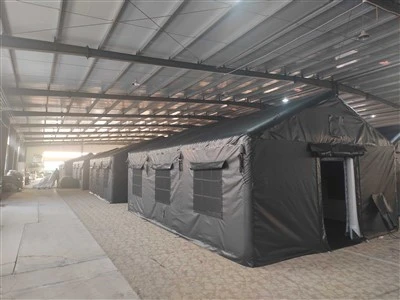
Tents are an essential part of the command post infrastructure, and choosing the right tent can enhance camouflage. For example, the 81 Type Military Tent – Classic Army Field Shelter for Accommodation & Command is designed to provide both shelter and effective camouflage. Its design and materials can help it blend in with the natural environment, reducing the risk of detection from the air.
5. Electronic Warfare
Electronic warfare is a powerful tool in anti - aircraft defense. It involves using electronic systems to disrupt or deceive enemy aircraft and their sensors. Electronic jamming can be used to interfere with the radar and communication systems of enemy aircraft, making it difficult for them to operate effectively.
By deploying electronic warfare systems around the command post, the military can create a protective electronic shield. This shield can prevent enemy aircraft from accurately targeting the command post and can also disrupt their ability to communicate with other units.
6. Drone Defense
With the increasing use of drones in modern warfare, defending against them has become a critical anti - aircraft measure. Drones can be used for surveillance, reconnaissance, and even as weapons. To counter this threat, Army Command Posts are using a variety of drone defense systems.
Some of these systems use radio frequency jamming to disrupt the communication between the drone and its operator. Others use lasers or net - firing systems to physically disable the drone. The Aluminum Frame Military Tent For Sale can also be used as a base for deploying these drone defense systems, providing a stable and protected platform.
7. Hardening of the Command Post
The physical structure of the command post can also be hardened to withstand aerial attacks. This includes using reinforced materials for construction and building underground or semi - underground facilities. Hardening the command post can protect it from the blast and fragmentation effects of aerial bombs and missiles.
In addition, the use of military vehicle side tent can provide additional protection and flexibility. These tents can be quickly deployed and can be used to house equipment and personnel, reducing the vulnerability of the main command post.


Conclusion
In conclusion, an Army Command Post employs a comprehensive set of anti - aircraft measures to protect itself from aerial threats. From radar systems and anti - aircraft missiles to camouflage and electronic warfare, each measure plays a crucial role in ensuring the safety and effectiveness of the command post.
As a supplier to Army Command Posts, I understand the importance of providing high - quality products and solutions. If you are interested in learning more about our products and how they can enhance your anti - aircraft defense capabilities, I encourage you to reach out for a procurement discussion. We are committed to providing the best possible support and solutions for your military needs.
References
- Military Handbook on Air Defense Systems
- Journal of Military Technology and Innovation
- Textbook on Modern Warfare and Defense Strategies