

In the high - stakes environment of military operations, maintaining seamless communication between an Army Command Post and higher - level commands is of utmost importance. As a supplier to Army Command Posts, I have witnessed firsthand the critical nature of this communication and the challenges that can arise when breakdowns occur. In this blog, I will explore how an Army Command Post handles communication breakdowns with higher - level commands.
Understanding the Importance of Communication
Effective communication is the lifeblood of any military operation. It ensures that strategic decisions made at higher levels are accurately transmitted to the Command Posts on the ground, and that real - time information from the field reaches the decision - makers. When communication breaks down, it can lead to misunderstandings, delays in decision - making, and potentially put the lives of soldiers at risk.
Common Causes of Communication Breakdowns
There are several factors that can lead to communication breakdowns between an Army Command Post and higher - level commands. Technical issues are one of the most common causes. Equipment failures, such as malfunctioning radios, satellite communication disruptions, or problems with network infrastructure, can prevent messages from being sent or received.


Environmental factors also play a significant role. Harsh weather conditions, such as heavy rain, snow, or strong winds, can interfere with radio signals. Mountainous terrain, dense forests, or urban environments can block or distort signals, making it difficult to establish a reliable connection.
Human error is another contributing factor. Misinterpretation of messages, improper use of communication equipment, or simple mistakes in encoding or decoding information can lead to breakdowns. Additionally, in high - stress situations, soldiers may make errors that disrupt the flow of communication.
Strategies for Handling Communication Breakdowns
1. Redundancy in Communication Systems
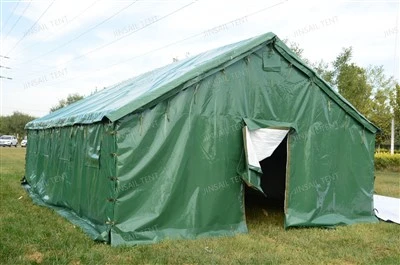
One of the primary strategies employed by Army Command Posts is to have redundant communication systems in place. This means using multiple methods of communication, such as radio, satellite, and land - line connections. For example, if the radio communication fails due to technical issues or environmental interference, the Command Post can switch to satellite communication. As a supplier, we provide a range of communication equipment to support these redundant systems. Our Us Military Tent is designed to house various communication devices, ensuring that they are protected from the elements and can operate effectively.
2. Training and Preparedness
Proper training is essential for soldiers to handle communication breakdowns effectively. They need to be trained on how to operate different communication systems, troubleshoot common problems, and follow established protocols in case of a breakdown. Regular drills and exercises are conducted to simulate communication breakdown scenarios, allowing soldiers to practice their response skills.
In addition to technical training, soldiers are also trained in communication etiquette and message clarity. They are taught to use simple, concise language and to repeat important information to ensure that it is understood correctly.
3. Backup Communication Plans
Army Command Posts develop detailed backup communication plans. These plans outline alternative routes and methods of communication in case the primary systems fail. For example, if the direct communication link with the higher - level command is lost, the Command Post may use a relay station or a nearby friendly unit to transmit the message.
The backup plans also include procedures for notifying other units and personnel about the communication breakdown. This ensures that everyone is aware of the situation and can take appropriate action.
4. On - Site Technical Support
Having on - site technical support is crucial for quickly resolving communication problems. Our company provides technical support teams that can be deployed to the Command Posts. These teams are equipped with the necessary tools and expertise to diagnose and repair communication equipment on the spot.
In addition to immediate repairs, the technical support teams also conduct regular maintenance checks to prevent potential breakdowns. They ensure that all communication systems are in good working condition and that any software or firmware updates are installed promptly.
5. Collaboration with Other Units
In cases where communication breakdowns cannot be resolved quickly, Army Command Posts may collaborate with other nearby units. These units can share their communication resources or act as intermediaries to relay messages to the higher - level commands.
For example, if a Command Post is unable to establish a direct connection with the higher - level command, it may request assistance from a neighboring unit with better communication capabilities. This collaborative approach helps to maintain the flow of information and ensures that the mission can continue.
Case Studies
To illustrate how these strategies work in real - world situations, let's look at a few case studies.
Case Study 1: Mountainous Terrain
In a military operation in a mountainous region, a Command Post experienced frequent communication breakdowns due to the terrain blocking radio signals. The Command Post immediately activated its backup communication plan, which involved using a satellite communication system. However, due to a technical glitch, the satellite system also failed.
The on - site technical support team quickly diagnosed the problem and was able to repair the satellite system within a few hours. In the meantime, the Command Post collaborated with a nearby unit that had a clear line of sight to the higher - level command. This unit relayed the messages on behalf of the Command Post, ensuring that the communication was maintained.
Case Study 2: Human Error
During a training exercise, a soldier accidentally misconfigured the radio equipment, causing a communication breakdown. The other soldiers on the team quickly recognized the problem and followed the established protocols for troubleshooting. They referred to the user manual and were able to correct the configuration within minutes.
The incident highlighted the importance of proper training and the need for soldiers to be familiar with the equipment they are using. It also demonstrated the effectiveness of the backup communication plans, as the Command Post was able to switch to an alternative communication method in case the radio could not be repaired immediately.
The Role of Our Products in Communication Resilience
Our company offers a range of products that contribute to the communication resilience of Army Command Posts. Our 30㎡ Metal Frame Tent provides a stable and protected environment for communication equipment. It is designed to withstand harsh weather conditions and can be easily set up and dismantled in different locations.
The 20 Person Military Tents are also used to house soldiers and communication facilities. They offer enough space for multiple communication devices and provide a comfortable working environment for the soldiers.
Conclusion
Communication breakdowns between Army Command Posts and higher - level commands are a serious challenge in military operations. However, by implementing strategies such as redundancy in communication systems, training and preparedness, backup communication plans, on - site technical support, and collaboration with other units, these breakdowns can be effectively managed.
As a supplier to Army Command Posts, we are committed to providing high - quality products and services to support communication resilience. Our products, such as the Us Military Tent, 30㎡ Metal Frame Tent, and 20 Person Military Tents, play a crucial role in ensuring that the communication systems can operate effectively in various environments.
If you are interested in learning more about our products and services or would like to discuss a potential procurement, please feel free to contact us. We are ready to provide you with the best solutions for your Army Command Post needs.
References
- Military Communication Handbook, Department of Defense
- Training Manual on Communication Breakdown Management, Army Training Command
- Case Studies in Military Communication Resilience, Military Research Institute