

Ballistic composite materials come in many forms and offer different performance levels. Among them, fiber-reinforced composites stand out for their light weight and strong resistance to penetration. They are the most widely studied ballistic materials today and also the fastest-growing segment in the market.
High-performance fibers commonly used in fiber-reinforced ballistic composites include Kevlar fiber, carbon fiber, ultra-high-molecular-weight polyethylene (UHMWPE) fiber, and glass fiber. One question often discussed in the industry is whether carbon fiber itself can be used for ballistic protection.
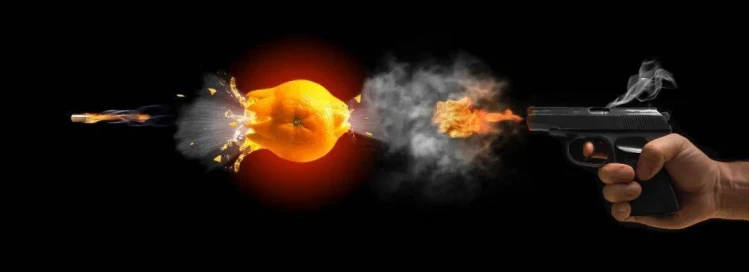
Can Carbon Fiber Be Used for Ballistic Protection?
Working Principles of Ballistic Composites
When a projectile penetrates a composite material, several damage mechanisms occur at the same time. These include laminate delamination, fiber–resin debonding, fiber tensile failure, and backface deformation. During these processes, the projectile's kinetic energy is gradually reduced, which leads to ballistic protection.
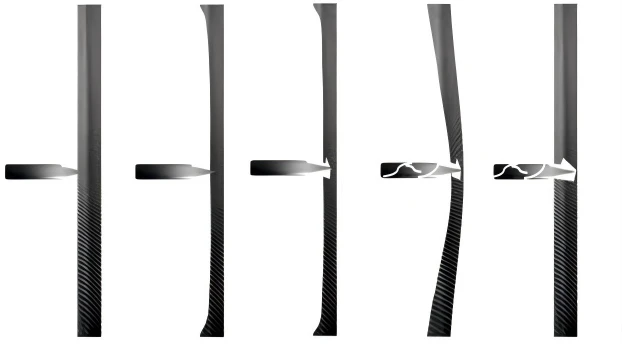
After impact, stress waves are generated at the contact point. These waves spread in two main ways. First, they travel along the fiber axis. Fibers are bonded by resin at intersection points. When stress waves reach these points, they transfer to other fibers. This increases the stress distribution area and helps dissipate energy. Second, when stress waves reach the fiber–resin interface, reflection occurs and delamination forms. This process absorbs additional energy.
In fiber-reinforced ballistic composites, the strike face mainly experiences shear failure, while the back face mainly undergoes tensile failure. For this reason, composites reinforced with a single type of fiber often cannot achieve optimal ballistic performance. By combining different fibers and designing a layered structure, better ballistic protection can be achieved.

Overview of Carbon Fiber
Carbon fiber refers to fibers in which carbon accounts for more than 90% of the total mass. It is produced from organic fibers through solid-phase reactions and forms a fibrous polymer carbon material. Carbon fiber is known for its low weight, high strength, high modulus, heat resistance, impact resistance, chemical stability, and low thermal expansion.
However, carbon fiber has a low elongation at break and limited toughness. For this reason, it is rarely used alone and is mainly applied as a reinforcing material in composites.
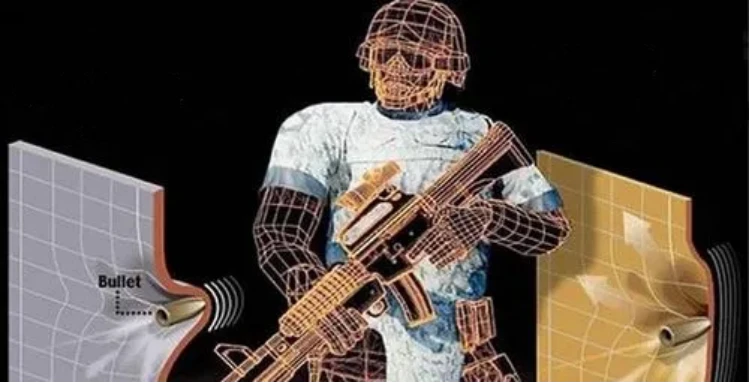
Ballistic vests and other protective armor rely on layered materials that can absorb and distribute impact energy. These materials usually have high tensile strength and can deform under stress, which helps dissipate the energy of a bullet.
Although carbon fiber has very high strength, it has poor ductility and limited ability to absorb and dissipate kinetic energy. It is also brittle and prone to fracture under impact or repeated loading. As a result, carbon fiber composites made only with resin and carbon fiber are not effective for ballistic protection. In practice, carbon fiber is usually combined with other high-performance fibers to achieve ballistic performance.
The Role of Carbon Fiber in Ballistic Materials
If carbon fiber is not suitable as the main bullet-stopping material, why is it still used in some ballistic composites?
Carbon fiber is valued for its high specific strength and durability. When used as a reinforcing component in ballistic materials, especially when combined with Kevlar or other ballistic fibers, it improves resistance to puncture and fragmentation. At the same time, it reduces overall weight, which enhances wearing comfort and mobility.

Carbon fiber mainly contributes in the following ways:
Structural reinforcement:
Carbon fiber adds structural integrity to composite ballistic materials. When layered with Kevlar or other ballistic fibers, it helps maintain material integrity after impact and supports the distribution of impact energy, reducing the risk of penetration.
Weight reduction:
Ballistic composites usually rely on multi-layer structures to stop projectiles. The low density of carbon fiber helps reduce total weight, improving comfort and flexibility for the wearer.

Conclusion
Carbon fiber offers high strength and low weight, but due to its brittleness and limited energy absorption capability, it is not ballistic on its own. Its rigidity and tendency to fracture under impact reduce its effectiveness in stopping bullets. However, when used as part of a composite system, carbon fiber can support ballistic performance. By combining its structural strength with other fibers that absorb and dissipate energy, effective ballistic protection can be achieved.
Some content sourced online; please contact us for removal requests if applicable.


