


As a supplier of inflatable command tents, I've always been intrigued by the concept of visual visibility from a distance. In various operational scenarios, such as military maneuvers, disaster relief operations, and large - scale events, the visibility of an inflatable command tent can significantly impact its functionality and effectiveness.
Factors Affecting Visual Visibility
Several factors play a crucial role in determining how visible an inflatable command tent is from a distance. One of the primary factors is color. Bright and high - contrast colors like neon orange or yellow tend to stand out more against natural landscapes. For example, in a forested area with predominantly green foliage, a neon orange inflatable command tent will be much more visible compared to a green or brown one. These colors are easily detectable by the human eye, especially at long range.
The size of the tent also matters. Larger inflatable command tents generally have higher visibility. A big tent occupies more visual space, making it easier to spot from afar. Consider a large - scale disaster relief operation where multiple tents are set up. A larger tent amidst smaller ones is likely to draw attention first, even from a considerable distance.
Weather conditions are another significant factor. In clear, sunny weather, the tent's visibility is at its optimum. The sun's rays illuminate the tent, making it more distinguishable. On the other hand, in foggy or overcast conditions, visibility can be severely reduced. The mist can obscure the tent, making it difficult to see, especially if its color does not provide enough contrast against the fog. Similarly, heavy rain or snow can also affect how well the tent is visible from a distance.
Design Considerations for Visibility
When designing inflatable command tents, we take visibility into account. For instance, we offer a range of 4 Season Inflatable Tent options with different color schemes. Some are designed with bold patterns that are easy to recognize even from afar. These patterns can break up the visual monotony and make the tent more noticeable.
In addition to color and patterns, reflective materials are also integrated into the tent design. Reflective strips or patches can enhance visibility, especially during low - light conditions. When light from a vehicle's headlights or a flashlight hits these reflective elements, they glow, making the tent highly visible in the dark.
Another design aspect is the shape of the tent. Unique and distinct shapes are more likely to be noticed from a distance. For example, a tent with a tall, conical shape stands out compared to a more boxy or traditional - looking tent. Our Inflatable Disaster Low Pressure Tent is designed with a distinctive shape that not only provides structural stability but also helps with long - distance visibility.
Applications and the Importance of Visibility
In military applications, the visibility of an inflatable command tent can be a double - edged sword. On one hand, in friendly territory or during certain operations where communication and coordination are essential, a highly visible tent can be beneficial. It allows troops to easily locate the command center, facilitating quick decision - making and efficient response to events.
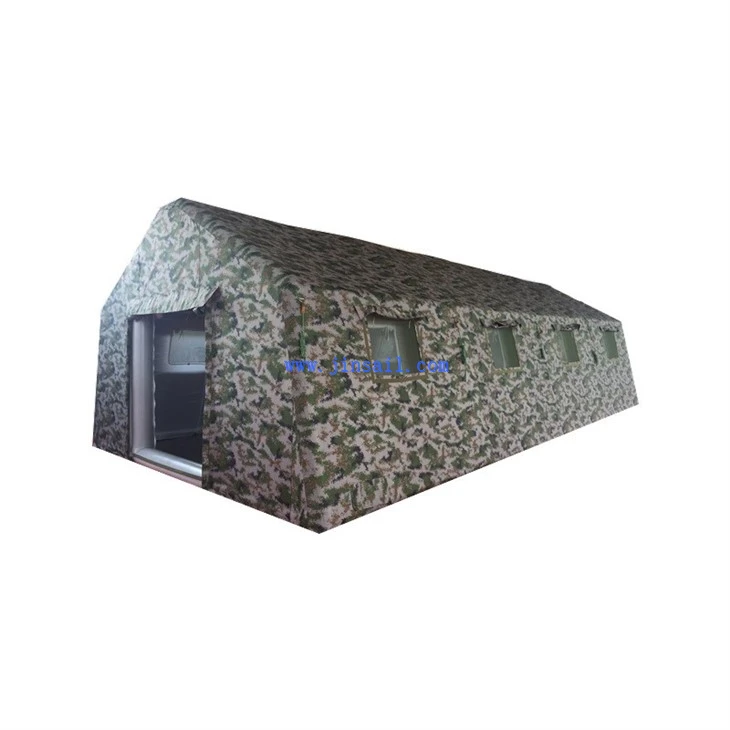
However, in enemy - controlled areas, too much visibility can pose a risk. In such cases, we offer tents with camouflage patterns and colors that blend in with the surrounding environment, reducing the tent's visual signature.
In disaster relief operations, high visibility is crucial. Rescuers need to quickly identify the command center to receive instructions and report on their progress. A visible tent can serve as a central point for coordinating relief efforts, making it easier to manage resources and ensure the safety of survivors. Our 46㎡ Fire Inflatable Tent is often used in fire - affected areas, where its bright color and large size make it easily visible in the smoky and chaotic environment.

Testing the Visual Visibility
Before releasing our inflatable command tents to the market, we conduct comprehensive visibility tests. These tests are carried out in various environments, including urban settings, forests, deserts, and mountains. We measure the distance at which the tent can be clearly seen by a human observer under different lighting conditions, such as daylight, twilight, and darkness.
We also use drones to capture aerial views of the tents from different heights and distances. This allows us to simulate the perspective of a spotter in an aircraft or from a high vantage point. The data collected from these tests helps us refine our designs and improve the visibility of our tents.
Conclusion and Call to Action
The visual visibility of an inflatable command tent from a distance is a complex but important aspect of its design. With careful consideration of factors such as color, size, shape, and materials, we can create tents that are highly visible in the right situations.
If you are in need of high - quality inflatable command tents with excellent visual visibility, we are here to provide solutions tailored to your specific requirements. Whether you are involved in military operations, disaster relief efforts, or large - scale events, our tent designs can meet your needs. Contact us to discuss your procurement needs and explore how our inflatable command tents can enhance your operations.
References
- "Principles of Visual Perception in Outdoor Environments" - A research paper on how humans perceive objects in different outdoor settings.
- "Design Considerations for Emergency Response Tents" - A report discussing the design aspects of tents used in emergency situations, including visibility.
- "Military Tent Requirements and Tactics" - An article focusing on the specific needs of military tents, including factors related to visibility on the battlefield.


