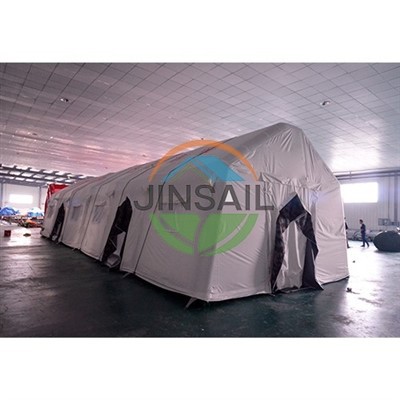


As a supplier of large inflatable tents, I often encounter inquiries from customers regarding the UV protection capabilities of our products. This is a crucial aspect, especially for those who plan to use the tents outdoors for extended periods. In this blog post, I'll delve into the science behind UV protection in large inflatable tents, explore the materials we use, and share insights on how our tents can shield you from the sun's harmful rays.
Understanding UV Radiation and Its Risks
Ultraviolet (UV) radiation is a form of electromagnetic radiation emitted by the sun. It is divided into three categories: UVA, UVB, and UVC. UVC is mostly absorbed by the Earth's atmosphere and does not reach the surface. However, UVA and UVB can have detrimental effects on human health and various materials.
UVA rays have a longer wavelength and can penetrate deep into the skin, causing premature aging, wrinkles, and skin cancer. UVB rays, on the other hand, have a shorter wavelength and are responsible for sunburns, skin redness, and an increased risk of skin cancer. Prolonged exposure to UV radiation can also damage materials, causing them to fade, weaken, and deteriorate over time.
UV Protection in Large Inflatable Tents
When it comes to large inflatable tents, UV protection is achieved through a combination of factors, including the choice of materials, the design of the tent, and the use of additional coatings or treatments.
Materials
The materials used in the construction of large inflatable tents play a significant role in determining their UV protection capabilities. At our company, we use high-quality fabrics that are specifically designed to block UV radiation. One of the most commonly used materials is Oxford fabric, which is known for its durability, strength, and UV resistance.
Oxford fabric is made from tightly woven polyester fibers, which create a dense barrier that can block a significant amount of UV radiation. Additionally, some Oxford fabrics are treated with UV inhibitors, which further enhance their UV protection capabilities. These inhibitors work by absorbing or reflecting UV rays, preventing them from penetrating the fabric and reaching the interior of the tent.
Another material that we use in our large inflatable tents is PVC (polyvinyl chloride). PVC is a synthetic plastic material that is commonly used in the construction of inflatable structures due to its flexibility, durability, and waterproof properties. PVC can also provide a certain level of UV protection, although it may not be as effective as Oxford fabric in blocking UV radiation.
Design
The design of the tent can also impact its UV protection capabilities. A well-designed tent should have a large overhang or canopy that can provide shade and block direct sunlight from entering the interior of the tent. Additionally, the tent should be designed to minimize the amount of exposed fabric, as this can reduce the surface area that is exposed to UV radiation.
At our company, we offer a variety of large inflatable tents with different designs and configurations to meet the specific needs of our customers. For example, our 17x35m Large Span Low Pressure Inflatable Tent features a large overhang and a spacious interior, providing ample shade and protection from the sun. Our Fire Red Oxford Fabric Low-Pressure Inflatable Tent is designed with a high-quality Oxford fabric that offers excellent UV protection and durability.
Coatings and Treatments
In addition to using UV-resistant materials and designing the tent to minimize exposure to sunlight, we also offer optional coatings and treatments that can further enhance the UV protection capabilities of our large inflatable tents. These coatings and treatments can be applied to the exterior of the tent to provide an additional layer of protection against UV radiation.
One of the most common coatings used in the industry is a UV-blocking spray. This spray contains special chemicals that can absorb or reflect UV rays, preventing them from penetrating the fabric and reaching the interior of the tent. Another option is to apply a UV-resistant film to the exterior of the tent. This film can provide a clear, protective barrier that can block UV radiation while still allowing light to pass through.
Testing and Certification
At our company, we are committed to providing our customers with high-quality large inflatable tents that meet or exceed industry standards for UV protection. To ensure the effectiveness of our products, we conduct rigorous testing and certification procedures.


Our tents are tested using industry-standard methods to measure their UV protection factor (UPF). UPF is a measure of the amount of UV radiation that is blocked by the fabric. A UPF rating of 50+ means that the fabric can block 99.9% of UV radiation, providing excellent protection against the sun's harmful rays.
In addition to UPF testing, our tents are also tested for durability, strength, and waterproofness. We use only the highest quality materials and manufacturing processes to ensure that our tents can withstand the rigors of outdoor use and provide long-lasting performance.
Conclusion
In conclusion, large inflatable tents can provide excellent UV protection when they are made from high-quality materials, designed to minimize exposure to sunlight, and treated with optional coatings or treatments. At our company, we offer a wide range of large inflatable tents that are specifically designed to provide maximum protection against the sun's harmful rays.
Whether you are looking for a large inflatable tent for outdoor events, commercial use, or personal use, we have the perfect solution for you. Our 17x35m Large Span Low Pressure Inflatable Tent, Fire Red Oxford Fabric Low-Pressure Inflatable Tent, and Low-Pressure Inflatable Surgical Tent are all designed to provide excellent UV protection, durability, and performance.
If you are interested in learning more about our large inflatable tents or would like to discuss your specific needs with one of our sales representatives, please don't hesitate to contact us. We look forward to working with you to find the perfect solution for your next project.
References
- American Academy of Dermatology. (n.d.). UV radiation: What it is and how it affects your skin. Retrieved from https://www.aad.org/public/everyday-care/skin-care-secrets/prevention/uv-radiation
- International Ultraviolet Association. (n.d.). UV radiation and health. Retrieved from https://www.iuva.org/uv-radiation-and-health
- U.S. Environmental Protection Agency. (n.d.). UV index: What you need to know. Retrieved from https://www.epa.gov/sunsafety/uv-index-what-you-need-know